I AM WILD OCEANS

 Reading Time 4 minutes
Why Marine Policy?
By the time I was in the 5th grade, I had already moved six times due to my dad’s military service. When we relocated from Atlanta, Georgia to a small town called Seaford inVirginia, I thought I had already learned not to get too attached to any given place. However, while my family unloaded all our boxes into our new house, the creek peaking from my backyard caught my 10-year-old brain’s attention. That summer while I waited for school to start, I spent hours wading in the shallow creek waters with a butterfly net, catching all the little fish and crustaceans that were taking refuge in the brackish waters between the York River and Chesapeake Bay. I could not help but fall in love with the marine ecosystem in my backyard.
I quickly found community in Scouting America with others who had a similar interest in exploring our local wilderness. My troop camped nearly every other weekend, exposing me to activities like backpacking and fishing as well as service like forestry management and beach cleanups. On one outing, while camping near a lake, some other Scouts and I put together makeshift rods with wire and nylon string and used our hotdogs as bait. We had a keen interest in the bass that lurked just where the water got dark. The vast majority of our hotdog bait fell off our un-barbed hooks, but that day we swear we caught and released a 15-pound largemouth bass. As always, on the way out from camp, we ensured everything looked exactly as we left it so the next campers could enjoy the nature and camaraderie built within it, just as we had.
While the bass story may (or may not) be true, the values of environmental stewardship, service to community, and leadership in the face of hard problems I learned while scouting ring just as true today as when I was first exposed to them. That is why I decided to pursue an education and experiences tackling environmental policy problems with a people-centered, resource-informed, and evidenced-based approach.
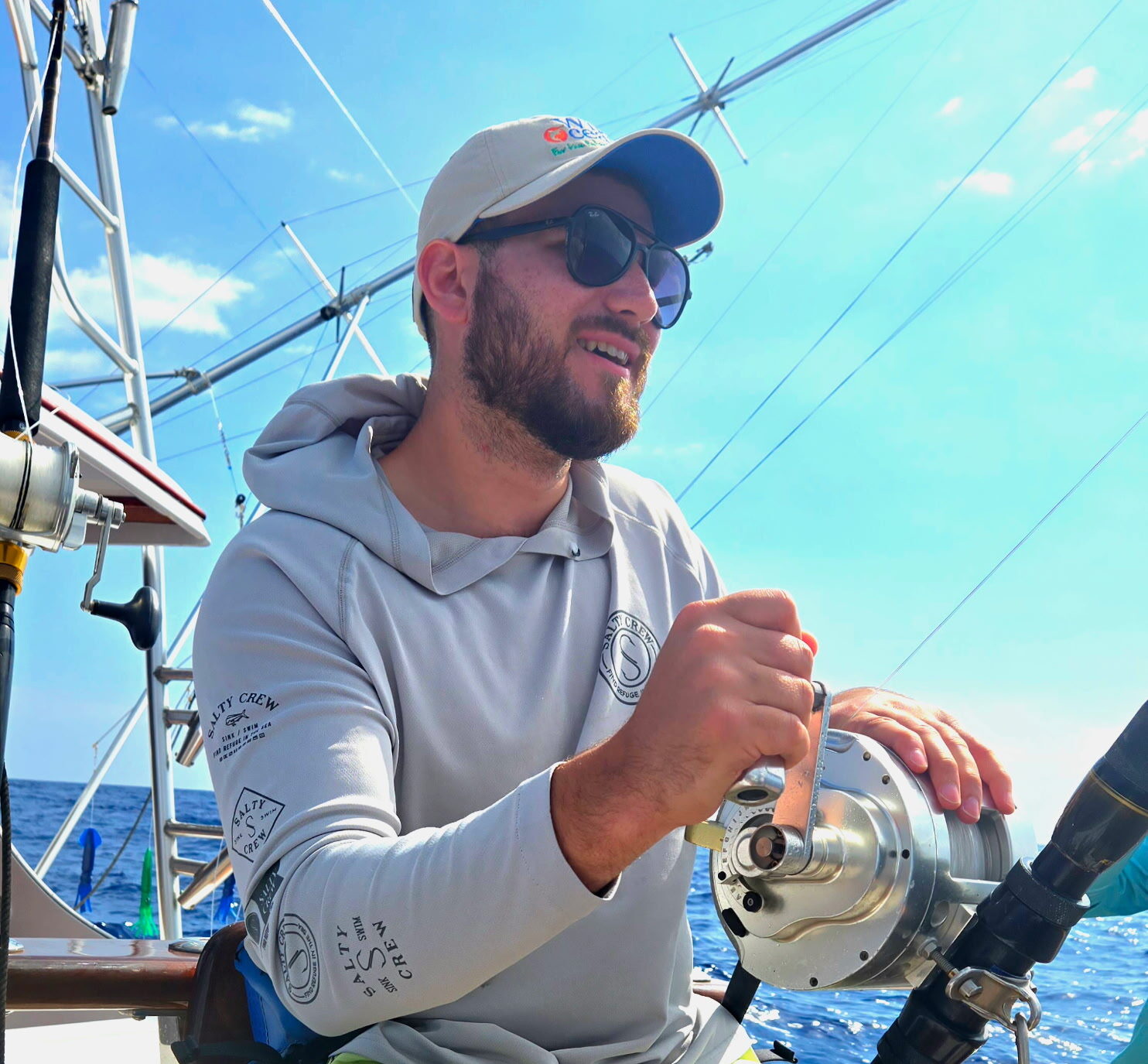
At Wild Oceans, I saw an organization that was serving others by funding needed research to fill science gaps, while also providing coastal communities with advocacy leadership at the local, national, and international levels. Graciously, former Wild Oceans President Rob Kramer answered my cold email and gave me a shot to get involved. Now as a part of Wild Oceans, I help empower coastal community leaders in fishery management issues by educating about the web of fishery laws, organizing for management meetings, and sorting through the best available science. In this work, I help ensure the voices of conservation-minded users of marine resources are provided the proper weight in a system geared towards commerce.
Within my efforts, I am not just looking at a single species or the short-term consequences of a quota. Rather, I am working to push the entire marine sector towards an ecosystem-based approach – one which looks to the long-term, considering the intricate levers between humans, resources, and the environment. In this way, we can have balance between food supply, recreation, and ecosystem longevity within our management regimes. I hope my work demonstrates that an empowered and engaged public brings about the best deci sions in the face of hard problems. United, we can collaborate and innovate, understand all needs and perspectives, and rise-up to overcome challenges. The continued existence of marine constituents for the betterment of our communities, governance, and ecosystems is why I support the future of fishing.
I am Wild Oceans.
Do you support the future of fishing? Tell us your story on Facebook and Instagram with #IAmWildOceans